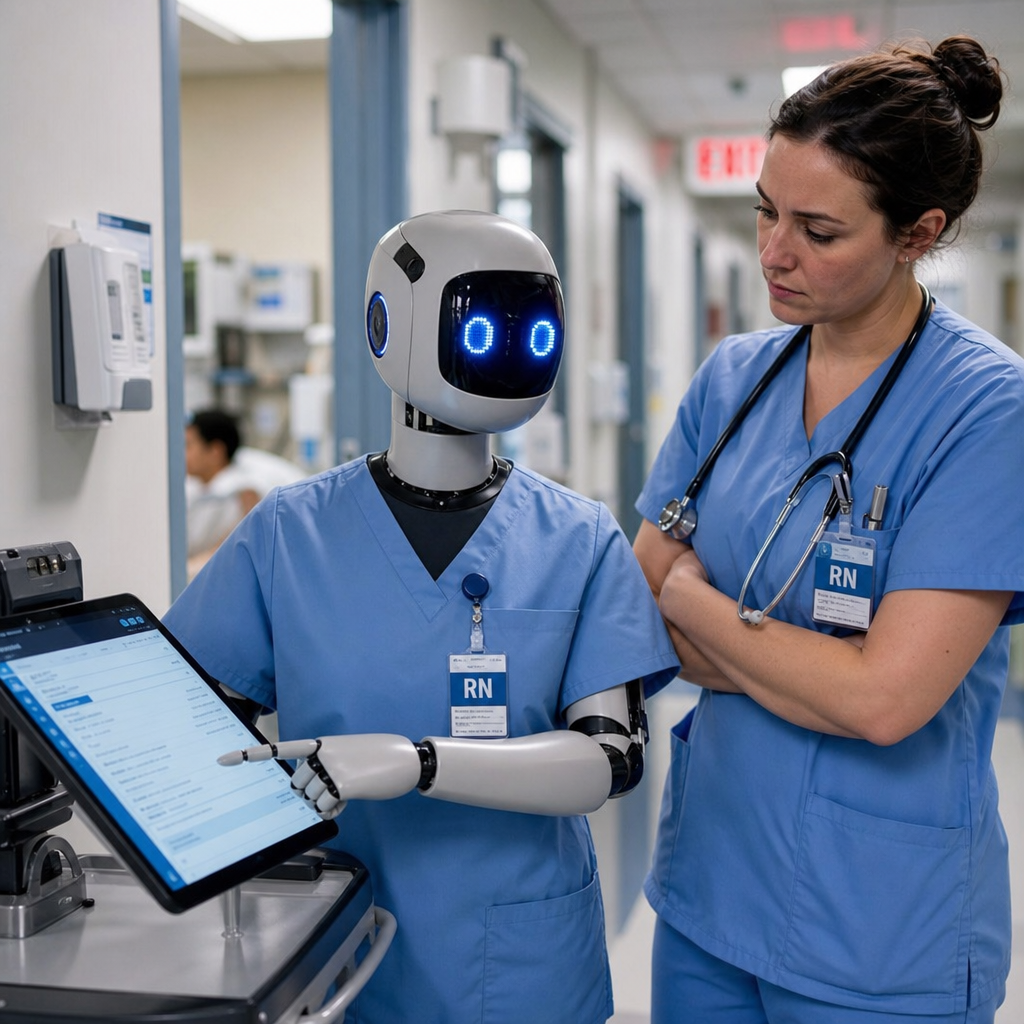
AI in Healthcare: The Ethical Dilemma of Replacing Nurses
The rapid advancement of artificial intelligence is reshaping industries at an unprecedented pace, and healthcare is no exception. With AI being introduced to replace nurses in New York, it brings forward not only technological marvels but also ethical and quality concerns. This decision has raised alarms among patients and healthcare professionals alike, urging society to ponder what it truly means to merge intelligence with compassion.
As robots and algorithms take on roles traditionally held by human caregivers, the question arises: Can AI deliver the same quality of patient care as a trained nurse? This burning issue has stirred a mix of excitement, fear, and skepticism—emotions that drive the need for a more nuanced conversation about the future of AI in healthcare.

The Current Landscape of AI in Nursing
The Push for Efficiency
As hospitals face growing demands, AI offers a promise of efficiency that is hard to ignore. Algorithms can process vast amounts of data quickly, potentially improving decision-making speeds and accuracy.
This technology can monitor patient vitals around the clock without fatigue, potentially catching life-threatening changes before they become problems.
The Cost Factor
One of the biggest incentives for replacing nurses with AI is cost. Hospitals can save substantial amounts in salaries and training, theoretically allowing those resources to be redirected toward other improvements.
However, this raises a critical discussion about the price of healthcare quality and whether it’s truly ethical to equate human care with cost-saving measures.
Quality of Care vs. Technological Advancement
Human Touch in Healthcare
Nurses not only provide medical care, but also emotional support, connecting with patients on a human level in ways technology cannot replicate. Their ability to empathize and communicate nuances goes beyond the capabilities of any machine.
The reliance on AI could lead to a cold, mechanical healthcare system where patients might feel like just another chart or data point.
Understanding AI Limitations
While AI can process data beyond human ability, it lacks the nuanced understanding of complex human conditions that experienced nurses possess. AI misses contextual subtleties that are often crucial to patient care.
- Cannot make judgment calls based on emotional intelligence.
- Struggles with unprogrammed or unexpected situations.
Patient’s Perspective on AI-driven Care
The Concerns
The introduction of AI has been met with skepticism from both patients and healthcare providers. The fear of potential errors and lack of personalized care looms large.
Moreover, trust in the healthcare system can erode if AI systems fail to meet expectations, potentially leading to increased stress and anxiety among patients.
The Benefits
However, it’s not all doom and gloom. For tech-savvy patients, AI might actually enhance the healthcare experience by offering quicker diagnoses and streamlined processes.
The key lies in striking a balance, ensuring AI augments human capabilities rather than replacing them altogether.
Future Outlook: Balancing AI and Human Care
Implementing AI Responsibly
For AI to be an effective tool in healthcare, a responsible implementation strategy must be devised. This includes rigorous testing and development phases to ensure reliability.
AI should serve as a complement to human personnel, taking on tasks that free healthcare workers to focus on aspects of care that require a human touch.
Regulatory and Ethical Standards
Establishing proper regulations and ethical standards is essential to navigate the challenges that AI brings to the healthcare sector. These standards should guide AI development and deployment, ensuring that human care remains at the forefront.
The need for transparent algorithms that patients and healthcare providers can understand cannot be overstated.
Conclusion: Toward a Collaborative Healthcare Model
As AI continues to evolve, its role in healthcare faces an inevitable expansion. However, this progression must be navigated with caution and a deep appreciation for the human elements that machines cannot replicate.
Bridging the gap between AI efficiency and human empathy will require continuous dialogue and cooperation between technology experts, healthcare professionals, and patients. Only then can we hope to achieve a model of healthcare that leverages the strengths of both worlds.
| Aspect | Human Care | AI Capabilities |
|---|---|---|
| Empathy | High | Low |
| Data Processing | Limited | Extensive |
| Decision Making | Contextual | Algorithmic |