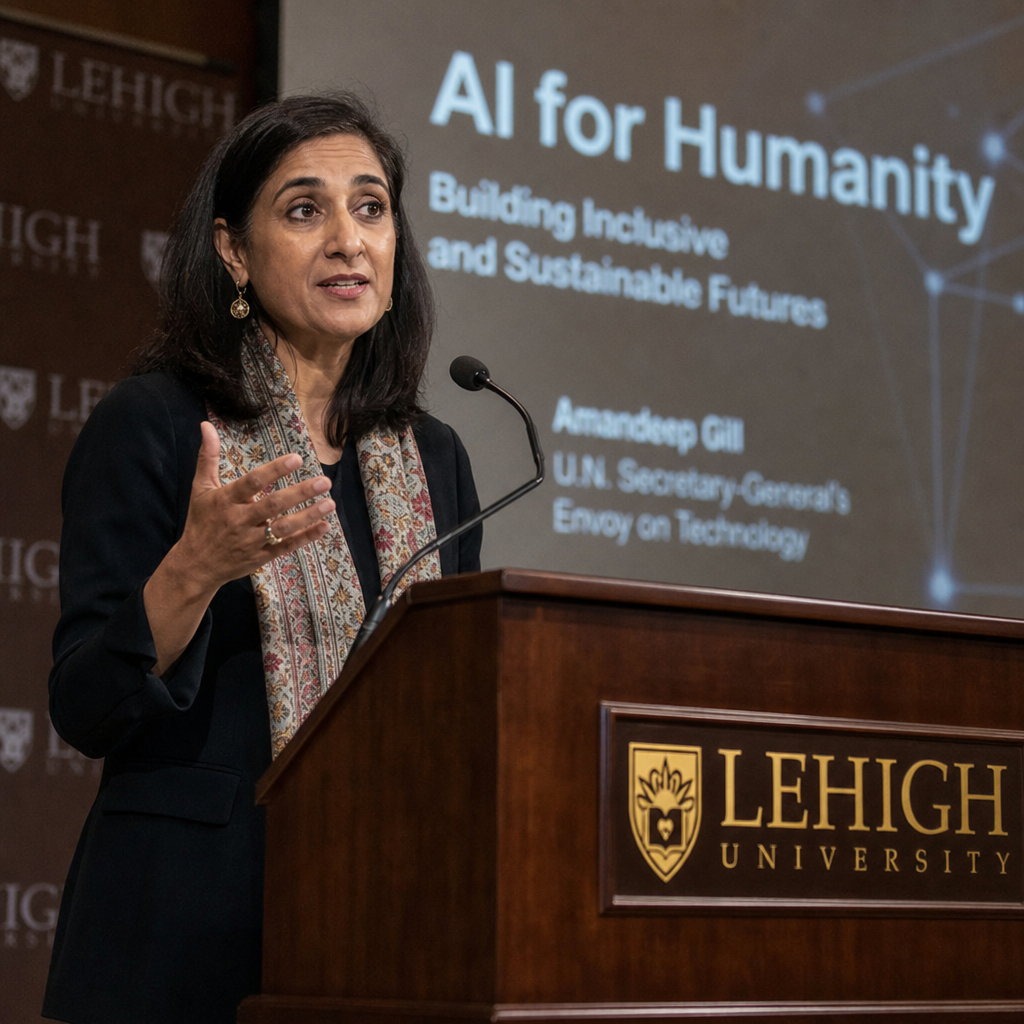
In a world rapidly transformed by artificial intelligence, institutions and individuals alike are grappling with the pivotal question: how do we steer this powerful technology for the greater good? At Lehigh University, U.N. Tech Envoy Amandeep Gill offered a poignant challenge — not just to adapt to AI’s inevitable rise, but to actively shape its trajectory for future generations.
Gill’s call to action emphasized the need for universities and their communities to spearhead research, discussions, and policy-making around AI. With its penchant for innovation and academic rigor, Lehigh is uniquely positioned to be at the forefront of these efforts.

The Role of Universities in AI Development
Universities serve as breeding grounds for new ideas and breakthroughs. They bring together bright minds and facilitate cutting-edge research. For AI, this means convening interdisciplinary teams that span computer science, ethics, sociology, and more.
Fostering Interdisciplinary Collaboration
AI inherently crosses multiple domains, requiring insights from technology, ethics, law, and social sciences. Institutions like Lehigh can create programs that encourage collaboration across these areas.
- Courses and workshops that promote cross-disciplinary learning and projects.
- Dedicated research centers focused on AI ethics and social impacts.
- Partnerships with industry to bridge academic and practical applications.
Promoting Responsible AI Development
With great power comes great responsibility, and this is particularly true for AI. Universities have the potential to lead the conversation on ethical AI, ensuring that the technology is developed and used responsibly.
- Development of comprehensive AI ethics curricula.
- Support for policy research that influences AI legislation.
- Advocacy for transparency in AI development processes.
Preparing Students for an AI Future
Equipping the next generation with the right skills is essential. Education must adapt to include AI literacy for all fields, not just computer science majors.
Integrating AI into Curricula
All students should have a basic understanding of AI, irrespective of their major. This can be achieved through varied educational strategies.
- Introductory courses on AI that are mandatory for all undergraduates.
- Hands-on labs and projects that allow students to apply AI concepts.
- Encouraging interdisciplinary projects where AI can be applied to real-world problems.
Building a Diverse AI Workforce
A diverse technological workforce is crucial to creating equitable and inclusive AI solutions. Universities play a critical role in ensuring diversity in tech fields.
| Current Initiatives | Future Strategies |
|---|---|
| Scholarships for underrepresented students. | Active recruitment from diverse backgrounds at younger education levels. |
| Outreach programs in schools to spark early interest. | Creating mentorship programs that connect students with industry leaders. |
The Future of AI: Lehigh’s Potential Impact
By taking an active role, Lehigh University can significantly influence the future direction of AI. Its efforts can set precedence for other institutions, echoing broadly across global academic and professional communities.
Leading AI Innovation
With its resources, Lehigh can spearhead research that pushes the boundaries of what AI can achieve.
- Focusing on sustainable and ethical AI practices.
- Developing AI solutions that address societal challenges.
- Engaging in global collaborations that enhance AI research.
Influencing AI Policy and Understanding
The role of academic institutions extends beyond research and teaching. They are pivotal in shaping the policy landscapes through informed debates and discussions.
- Hosting conferences and panels with global AI thought leaders.
- Publishing influential research that guides policy-makers.
- Creating awareness through public lectures and community events.