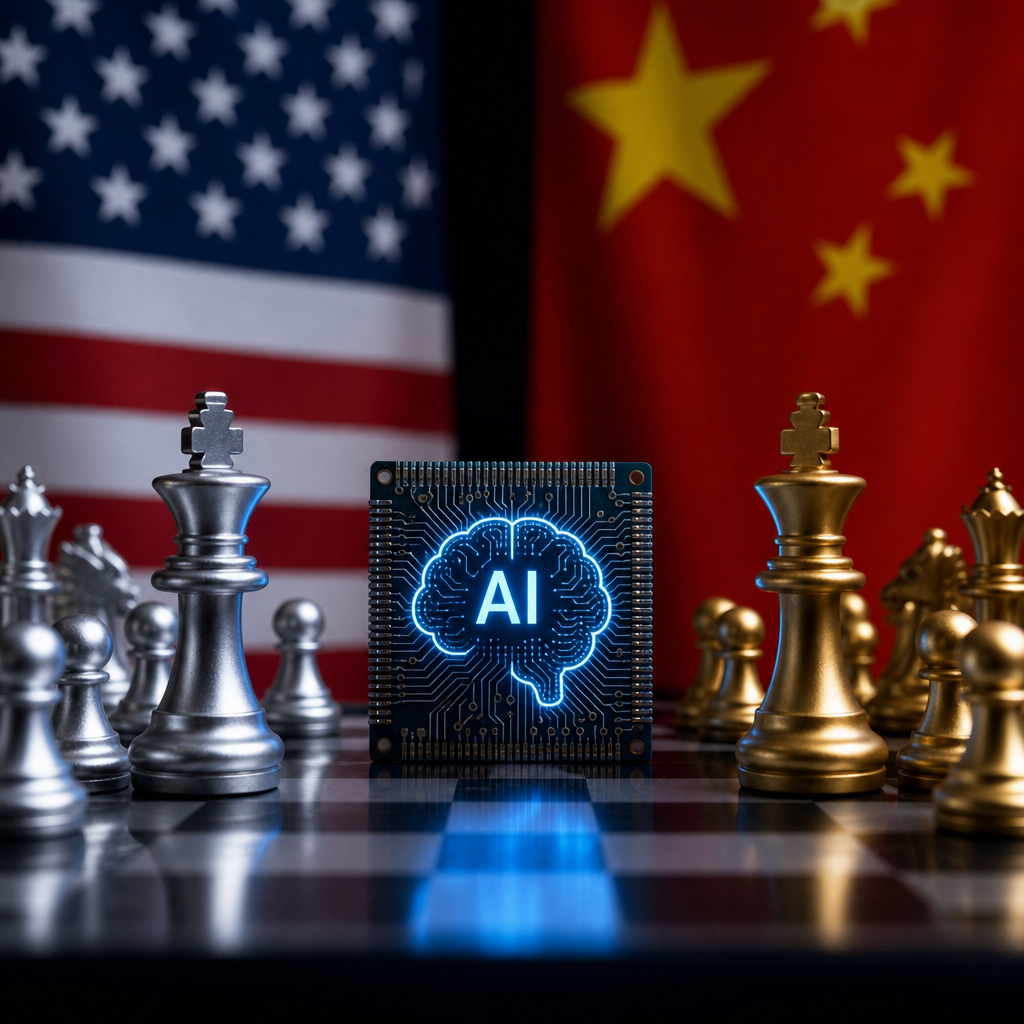
The discussion around the burgeoning field of artificial intelligence often revolves around cutting-edge technology, but it’s also a tale of geopolitics and strategic positioning. The US, a technology powerhouse, faces the intricate challenge of addressing the rise of Chinese AI without sending ripples that could possibly hinder its own industry. It’s where technology meets policy, and that juncture is fraught with complexity and potential consequences.
As the US weighs its response, industry voices are cautioning against broad restrictions on open-weight AI models. These voices are urging a more nuanced approach, one that balances national security concerns with the need for innovation. Their message is clear: sweeping restrictions could stifle the very industry the US seeks to protect and advance.

Understanding the Landscape
The rapid advancement of AI technologies in China has been closely monitored by the US. The Chinese government’s focus on AI as a part of their broader technological strategy has raised alarms. However, imposing strict controls on AI might not be the silver bullet solution.
Many in the tech industry are concerned about the possible stifling of innovation. They argue that the broad application of restrictions could inadvertently undermine domestic AI developments.
Balancing Security and Innovation
Finding the right balance between security and innovation is crucial. Here are some of the key considerations:
- Assessment of Threat Levels: Understanding which AI advancements pose a genuine threat.
- Impact on Industry: Evaluating how restrictions could impact both startups and established firms.
- International Collaboration: Encouraging partnerships to foster innovation while maintaining security.
Case Studies: A Comparative Analysis
To illustrate the complexity of the situation, let’s look at some case studies of different approaches taken by countries around the world.
| Country | AI Policy Approach | Outcome |
|---|---|---|
| United Kingdom | Focused on innovation with a balanced regulatory framework. | Steady growth in AI startups and collaboration with international companies. |
| Germany | Emphasis on data protection and strict AI guidelines. | Successfully maintained data privacy while encouraging AI research. |
| South Korea | Strong government support for AI research with clear ethical guidelines. | Rapid advancements in AI, particularly in application-focused areas. |
The Path Forward
A nuanced approach to US policy on Chinese AI involves multiple layers of consideration. Here’s what industry leaders recommend:
- Targeted Restrictions: Focus restrictions on areas with the highest security risk rather than blanket bans.
- Industry Collaboration: Engage with industry experts to draft intelligent policy frameworks.
- Continuous Monitoring: Implement systems to monitor AI advancements and adjust policies accordingly.
Conclusion: An Adaptive Strategy
In the ever-evolving battlefield of AI technology, adaptability is key. The US and its industry leaders must work hand in hand to devise strategies that safeguard security while promoting innovation.
This strategic partnership will ensure the US not only remains a leader in AI but also sets a standard for ethical and effective AI development worldwide.


