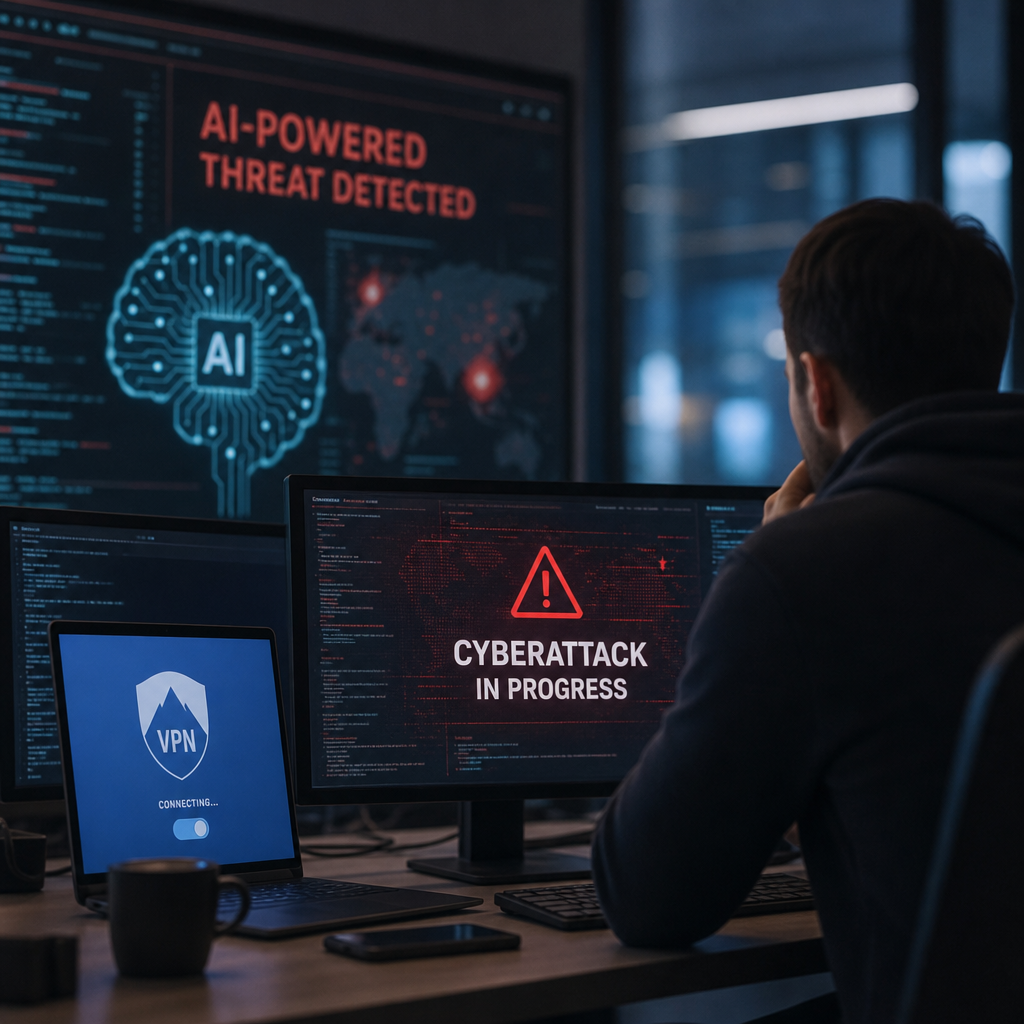
In the arms race between cyberattackers and cybersecurity experts, one thing is becoming unmistakably clear: the rules of engagement are changing fast. Modern cybercriminals are increasingly leveraging AI to orchestrate sophisticated attacks that expose significant weaknesses in traditional enterprise VPNs.
This revelation comes at a time when businesses are more reliant than ever on VPNs to safeguard their digital assets and facilitate remote work setups. But are these good old security protocols capable of withstanding the AI-augmented threats looming on the horizon?

The Evolution of Cyber Threats
Cyber threats have evolved considerably over the past decade. The integration of AI into offensive strategies has enabled cybercriminals to launch more targeted, efficient, and devastating attacks.
From spear-phishing campaigns to complex ransomware deployments, AI is being harnessed to automate and enhance the efficacy of these threats tenfold.
AI as a Tool for Attackers
- Automation: AI algorithms can automate the process of scanning for vulnerabilities in real-time, significantly reducing the time taken to infiltrate systems.
- Adaptation: Machine learning models allow attackers to adapt their tactics dynamically based on the defenses they encounter.
- Scale: The ability to execute attacks on a massive scale, across multiple vectors, simultaneously, poses a daunting challenge to traditional defense mechanisms.
Why VPNs Are Falling Short
Enterprise VPNs have long been the cornerstone of corporate cybersecurity, creating encrypted pathways for secure data transmission. However, they are struggling to keep pace with AI-driven threats.
An over-reliance on VPNs without accounting for their limitations can lead to major security oversights.
Limitations of Traditional VPNs
- Static Protection: VPNs provide a static method of encryption, which is less effective against AI-powered dynamic attack vectors.
- Latency Issues: The need to process encrypted data can introduce latency, impacting productivity, especially in a remote work environment.
- Single Point of Failure: VPN endpoints are prime targets for attackers, and a compromised endpoint can lead to a massive breach.
The Path Forward: Rethinking Enterprise Security
To outmaneuver AI-backed threats, enterprises need to rethink their security frameworks. It’s no longer about just patching what’s broken; it’s about pre-emptively preventing compromises with dynamic and adaptive solutions.
| Traditional Approach | Modern Approach |
|---|---|
| VPN-centric Security | Zero Trust Architecture |
| Perimeter-based Defense | Adaptive Threat Detection |
| Manual Threat Response | Automated Response Systems |
The transition from a perimeter-focused security strategy to a zero-trust model is gaining traction, as is the deployment of AI-driven threat detection mechanisms within organizations.
Conclusion
The rise of AI-backed cyberattacks undoubtedly poses one of the greatest challenges in the realm of cybersecurity today. While enterprise VPNs have served as reliable guardians of digital fortresses, their limitations in the face of evolving threats necessitate a paradigm shift.
By embracing cutting-edge AI defenses and transitioning to a more robust and flexible security framework, businesses can ensure resilience against the high-tech intrusions of tomorrow.
