Governor Newsom’s Executive Order: Preparing California’s Workforce for AI Disruption
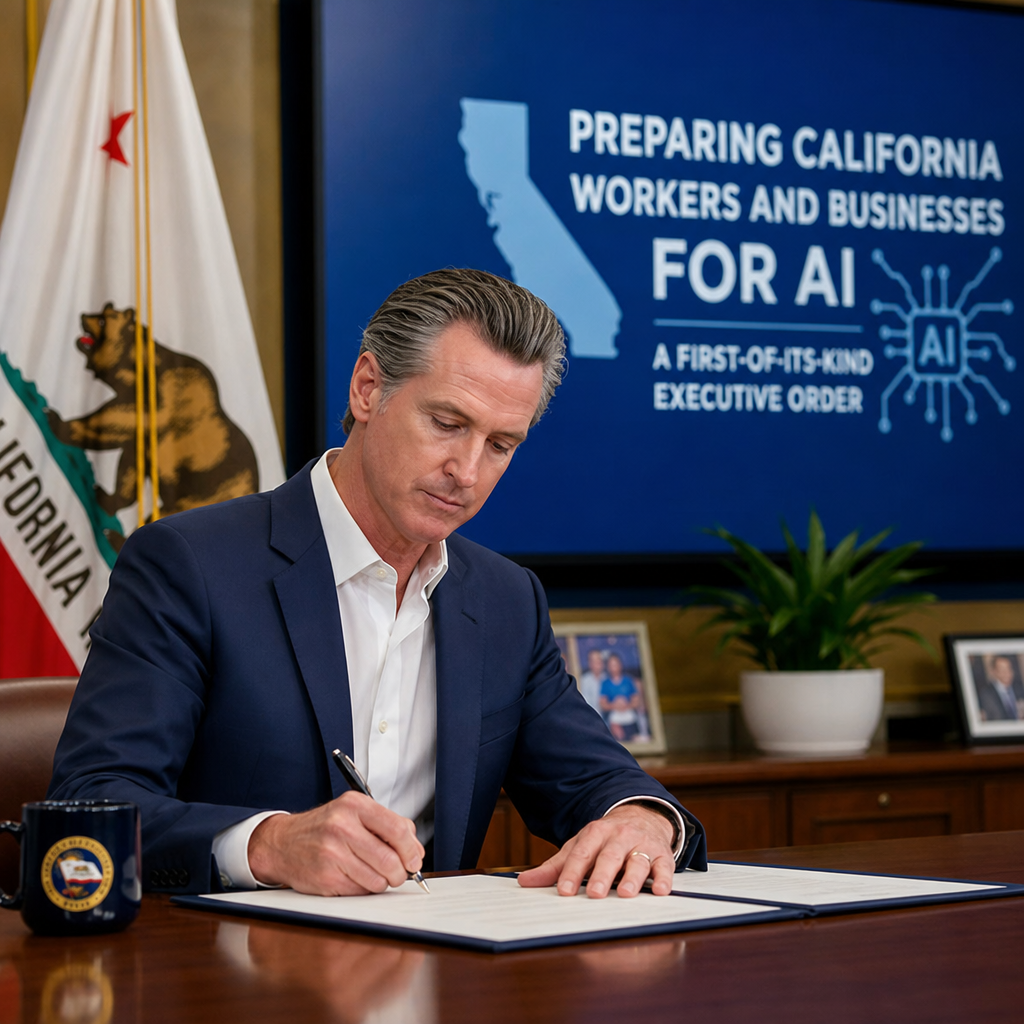
In an unprecedented move, Governor Gavin Newsom has signed an executive order aimed at equipping both workers and businesses in California to face the evolving landscape of artificial intelligence (AI). This first-of-its-kind policy initiative seeks to mitigate the impacts of AI disruption by fostering a proactive approach to technological integration in the workplace. It marks a significant step forward in acknowledging the shifts AI brings to the future of work.
The initiative is designed to prepare Californians for significant changes in employment as AI continues to permeate various sectors. With automation set to impact a range of industries, from manufacturing to customer service, this executive order aims to bolster the state’s economic resilience.

Recognizing the Potential Disruption
AI and automation are no longer distant future concepts; they are here and evolving rapidly. Recognizing the potential disruption, California is setting a precedent for other states by addressing the need for adaptability and skill enhancement in the workforce.
This executive order underscores the importance of adapting educational frameworks to meet the demands of an AI-driven world. Collaborative efforts between educational institutions and technology companies are expected to establish tailored programs that address this evolving necessity.
The Role of AI in the Workforce
AI is already significantly involved in various sectors, altering the way we work, think, and communicate. The executive order highlights the importance of identifying which roles are susceptible to automation and the extent to which AI can augment human capabilities.
- Identifying consistent patterns of AI integration across industries.
- Exploring sectors where AI serves as a tool for enhancing productivity.
- Assessing the risk of jobs becoming obsolete versus being transformed.
Strategies for Adaptation and Growth
To mitigate AI-induced employment disruption, California’s policy focuses on three main strategies: education, retraining, and economic incentives. The state is investing in educational programs that focus on AI literacy and advanced technological skills.
Retraining programs are being developed to assist workers in transitioning to emerging roles that AI cannot replace. This approach not only focuses on technical skills but also emphasizes creativity, critical thinking, and emotional intelligence.
Supporting Businesses and Innovation
In parallel with preparing the workforce, the executive order also encourages businesses to innovate responsibly. It emphasizes creating a collaborative ecosystem where AI drives growth without undermining employment opportunities.
- Incentivizing businesses that integrate AI responsibly and transparently.
- Fostering partnerships between startups and established firms for AI advancements.
- Encouraging open dialogue about ethical AI implementation.
| Strategic Initiative | Objective | Impact |
|---|---|---|
| Education Reform | AI Literacy & Skill Development | Equipping future workforce with necessary AI skills. |
| Retraining Programs | Work Transition Support | Helping current workforce adapt & transition to new roles. |
| Business Incentives | Responsible AI Integration | Encouraging ethical innovation and sustainable growth. |
Conclusion: Paving the Way for an AI-Driven Future
Governor Newsom’s executive order represents a forward-thinking approach to the challenges presented by AI. By fostering a culture of innovation, education, and inclusion, California is positioning itself as a pioneer in building a future where technology complements rather than displaces human effort.
As AI technology continues to develop at an unprecedented pace, initiatives like these are vital in ensuring that the workforce and businesses can adapt and thrive. California’s bold step provides a model for others, blending technological advancements with sustainable job creation and economic growth.