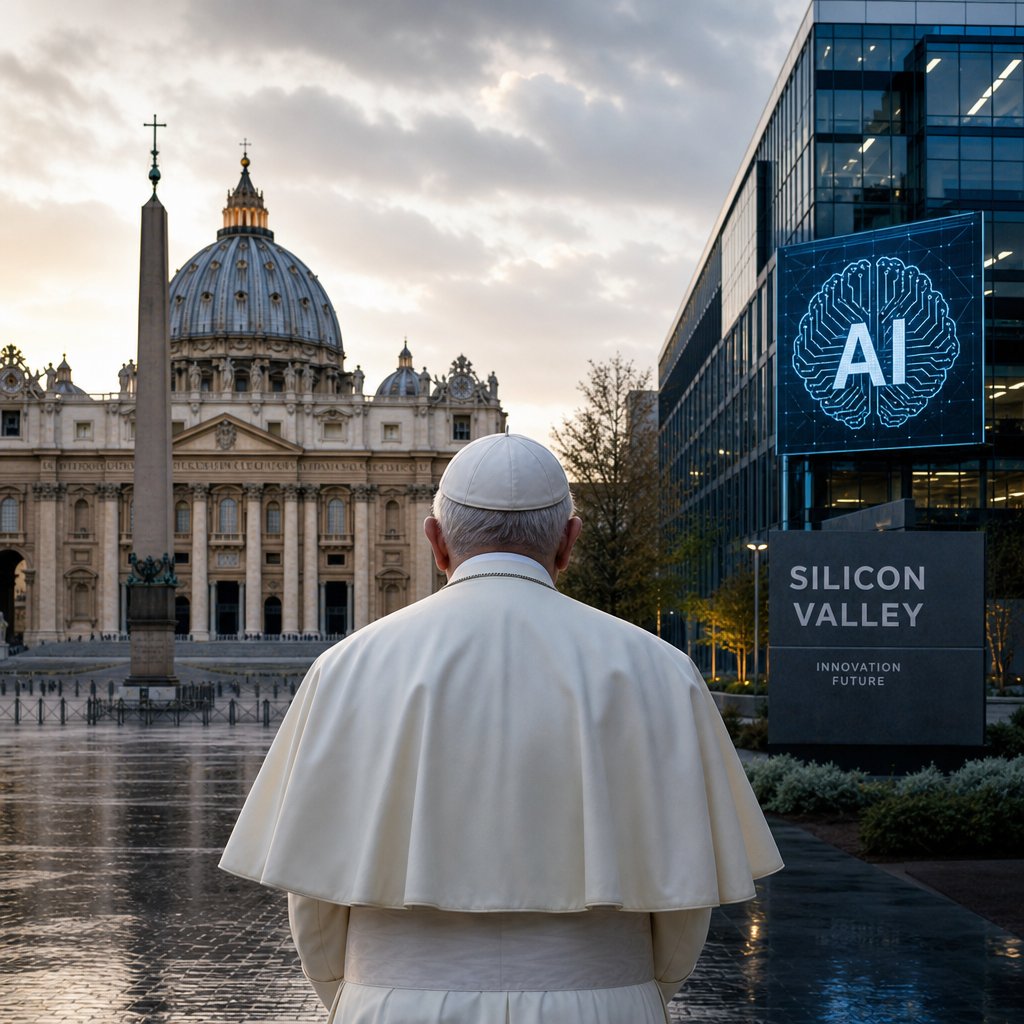
In a digital age dominated by rapid technological advancements, a new contender has emerged to challenge Silicon Valley—the Vatican. With a rich history of philosophical and ethical discourse, the Vatican offers a unique perspective on the implications of artificial intelligence (AI), casting a spotlight on the ethical and moral dimensions that are often overshadowed by innovation.
The timing of this warning is pivotal. As AI becomes increasingly integrated into every aspect of our lives, from education to employment, the Vatican’s message serves as both a cautionary tale and a call to action for those who navigate this fast-paced landscape.

The Moral Imperative of AI
The Vatican’s concerns center around the moral implications of AI. As AI systems become more autonomous, the ethical responsibilities of their development and implementation become more pressing. The Vatican argues that technology should serve humanity, not the other way around.
Historical Context
- The Vatican’s Ethical Roots: The rich tradition of ethical considerations driven by theological perspectives.
- Lessons from the Industrial Revolution: Historical cautionary tales of technology impacting societal structures.
The Vatican’s historical role in moral inquiry positions it uniquely to address these challenges. Lessons from the past remind us of the potential pitfalls when technology evolves faster than our ethical frameworks.
AI Bias and Fairness
One of the Vatican’s key concerns is the inherent biases in AI. These biases can propagate societal inequalities if left unchecked. The urgency for accountability and fairness in algorithmic decisions becomes paramount to ensure equity in outcomes.
Impacts on Social Structures
- Employment: How AI-driven decisions could potentially skew opportunities based on biased data.
- Access to Resources: The risk of biased algorithms affecting access to essential services.
A focus on creating transparent AI systems that allow for scrutiny is needed to avoid amplifying existing biases.
The Vatican’s Call to Action
The Vatican’s involvement in discussions around AI is not just a warning but a call to action. There is a strong plea for collaborative efforts to ensure AI development aligns with human values and ethical principles.
Potential Pathways
- Interdisciplinary Dialogue: Encourage discussions between technologists, ethicists, and policymakers.
- Ethical Guidelines: Establish concrete ethical standards that guide AI development.
To ensure these pathways are effective, collaborations across sectors and industries are essential in fostering ethical technology growth.
Conclusion: A Meeting of Minds
The Vatican’s initiative serves as a reminder that as we hurtle towards a future governed by technology, maintaining our humanity and moral compass is more crucial than ever. Bridging the gap between technology and ethics requires a cooperative effort that values human dignity above technological supremacy.
| Vatican Concerns | Proposed Solutions |
|---|---|
| AI Bias | Transparent systems, ethical oversight |
| Moral Implications | Value-driven development, interdisciplinary dialogue |